Gov tracking crypto analysis
The government does not track every transaction in real time, but it tracks enough to build a complete picture of your activity. This analysis focuses on how enforcement agencies connect on-chain data to real-world identities.
Chainalysis and Tracing Software
Most law enforcement agencies use specialized blockchain intelligence tools like Chainalysis. These platforms allow the FBI and IRS to trace the flow of funds across multiple wallets and exchanges. They flag addresses associated with sanctions, darknet markets, or ransomware attacks. If your wallet interacts with a flagged address, it becomes a point of interest.
Exchange KYC and Geo-Tracking
Centralized exchanges act as the primary bridge between crypto and traditional finance. Coinbase, for example, now provides geo-tracking data to enforcement agencies. When you verify your identity (KYC) and deposit fiat currency, your on-chain activity is linked to your legal name and address. This data is accessible via subpoenas or court orders.
IRS and Wallet Visibility
The IRS can see your crypto wallet if it is connected to a regulated entity. They receive data from Form 1099-K and 1099-B reports issued by exchanges. While the IRS cannot directly monitor a private, non-custodial wallet without external data, they can infer ownership through transaction patterns and IP logs provided by service providers.
Evaluating gov tracking crypto analysis choices that change the plan
When assessing blockchain analytics tools for regulatory compliance, the goal is to balance investigative power with operational reality. No single software offers perfect visibility; each solution involves specific tradeoffs between data depth, accuracy, and the types of transactions it can resolve. Understanding these differences prevents over-reliance on tools that may miss critical off-chain activity or generate false positives.
The primary tension lies in coverage versus precision. Broad-spectrum platforms may scan millions of addresses quickly but often lack the granular context needed for complex laundering schemes. Conversely, specialized forensic tools provide high-fidelity attribution but may struggle with newly launched tokens or obscure privacy-focused chains. Readers should evaluate whether a tool’s strength aligns with their specific asset classes and jurisdictional requirements.
On-Chain Transparency vs. Off-Chain Privacy
Public ledgers like Bitcoin and Ethereum offer full transaction histories, making them relatively straightforward to trace using standard analytics. However, this transparency is a double-edged sword. While it allows agencies to follow funds from wallet to wallet, it also creates permanent, immutable records that can be used by adversaries to map user behavior. Tools must distinguish between address activity and user identity, a distinction that becomes blurred when users interact with decentralized exchanges (DEXs) or mixers.
Off-chain interactions, such as fiat on-ramps and custodial wallets, remain the most significant blind spots. A blockchain analytics tool might trace a transaction to a centralized exchange (CEX) like Coinbase, but resolving the final identity requires cooperation with the platform. This creates a dependency on regulatory frameworks and data-sharing agreements that vary by country. For instance, Coinbase’s recent adoption of geo-tracking data for law enforcement highlights how off-chain data can bridge the gap, but this is not universal across all platforms.
Accuracy and the "Probabilistic Guess" Problem
Blockchain analysis is fundamentally probabilistic. Tools assign confidence scores to address labels, but these are estimates, not facts. A high confidence score for a "darknet market" address does not guarantee that every transaction involving that address is illicit. Misattribution can lead to frozen assets or incorrect compliance flags, which carries significant legal and reputational risk.
Readers should scrutinize how a tool handles these ambiguities. Does it provide raw data for manual review, or does it automate decisions? Automated systems may reduce workload but increase the risk of errors. The best tools offer transparency into their labeling sources and allow users to adjust sensitivity thresholds based on their risk appetite. This is critical for institutions that must justify their compliance decisions to auditors and regulators.
Cost and Scalability
Advanced blockchain analytics is expensive. Licensing fees for enterprise-grade tools can run into six figures annually, scaling with the number of alerts generated or the volume of data processed. For smaller firms or individual researchers, this cost may be prohibitive. Open-source alternatives exist but often require significant technical expertise to maintain and update.
Scalability is another key consideration. As transaction volumes grow and new chains emerge, tools must continuously update their databases to remain effective. A tool that was comprehensive in 2023 may already be missing activity on newer Layer-2 networks or privacy coins. Evaluating a vendor’s update frequency and chain support is essential to ensure long-term viability.
Comparison of Analytics Approaches
The table below contrasts three common approaches to government tracking crypto analysis, highlighting their strengths and limitations.
| Approach | Primary Strength | Key Limitation | Best Use Case |
|---|---|---|---|
| Centralized Exchange Data | High identity resolution via KYC | Requires platform cooperation | Resolving fiat on/off ramps |
| Blockchain Analytics Software | Full transaction history tracing | Cannot identify off-chain users | Following fund flows on-chain |
| Privacy Coin Analysis | Detects mixing patterns | Low resolution, high false positives | Investigating tumbler usage |
The market for these tools is evolving rapidly. As regulations tighten, the demand for more sophisticated, real-time monitoring solutions will likely drive innovation. However, the inherent limitations of blockchain transparency mean that no tool will ever provide a complete, unassailable picture of user activity. Effective analysis requires combining multiple data sources and maintaining a healthy skepticism of automated outputs.
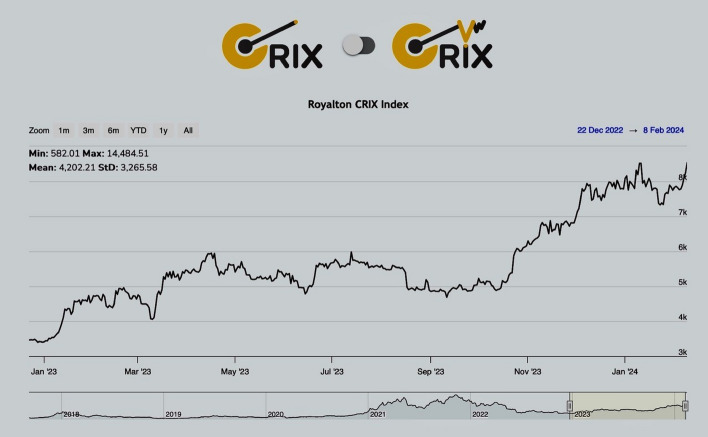
For context on the broader market impact, monitoring the price action of major crypto assets can provide insight into how regulatory news affects investor sentiment.
Technical analysis of these assets often reveals patterns that correlate with regulatory announcements, offering a quantitative layer to the qualitative analysis of tracking tools.
How to choose the right monitoring tools
Selecting infrastructure for tracking crypto requires matching your specific regulatory obligations to the right technical capabilities. The landscape has shifted from generic blockchain explorers to specialized platforms that integrate with law enforcement data streams. Your choice depends on whether you need to monitor your own compliance posture or analyze broader market movements for institutional reporting.
1. Evaluate platform-level data sharing
Start by assessing how exchanges and custodians share data. Platforms like Coinbase have begun licensing blockchain tracing software directly to enforcement agencies, creating a transparent chain of custody. If your institution interacts with these regulated entities, you can rely on their internal compliance reports to satisfy basic government tracking requirements. This reduces the need for independent on-chain surveillance for standard fiat-on-ramp activities.
2. Integrate blockchain tracing software
For deeper analysis, integrate dedicated tracing tools that map wallet addresses to real-world identities. These platforms visualize transaction flows across decentralized exchanges and mixers, which is essential for detecting illicit activity. Look for tools that offer API access to automate alerts when specific risk thresholds are breached. This integration turns raw blockchain data into actionable intelligence for your compliance team.
3. Monitor legislative policy trackers
Regulatory frameworks are evolving rapidly, making static compliance strategies obsolete. Subscribe to official policy trackers, such as the LexisNexis US Crypto Policy Tracker, to stay updated on pending legislation like the Clarity Act. These resources provide real-time updates on how new laws might impact your operational requirements. Regular monitoring ensures your tools remain aligned with the latest enforcement priorities.
4. Verify IRS reporting capabilities
Ensure your selected tools can generate reports compatible with IRS Form 1099-DA requirements. The agency’s ability to see crypto wallets is increasing through data sharing agreements with major exchanges. Your infrastructure should be able to flag transactions that exceed reporting thresholds automatically. This proactive approach minimizes the risk of audits and penalties during tax season.



As an Amazon Associate, we may earn from qualifying purchases.
5. Test integration with existing systems
Before full deployment, test your chosen tools against your existing database and reporting workflows. Ensure that the software can handle the volume of transactions your institution processes without latency. Check if the interface allows for easy export of data to legal or audit teams. Smooth integration prevents operational bottlenecks when urgent investigations arise.
6. Establish a review cadence
Set a quarterly review process to evaluate the effectiveness of your monitoring stack. Market conditions and regulatory expectations change quickly; what worked in 2025 may be insufficient in 2026. Solicit feedback from your compliance officers and legal counsel to identify gaps. Adjust your toolset based on these insights to maintain robust protection against evolving threats.
Watchouts for government crypto tracking tools
Institutional infrastructure is evolving faster than the public narrative suggests. When evaluating tools designed for regulatory compliance or market research, you must distinguish between genuine surveillance capabilities and marketing exaggeration. The gap between what platforms claim they can do and what they actually deliver is where most errors occur.
Misleading transparency claims
Many platforms advertise "full visibility" into wallet activity, but this often excludes off-chain interactions or privacy-focused coins. Always verify which chains are supported and whether the data includes historical records or only recent transactions. If a tool cannot trace a specific protocol interaction, its utility for institutional audits is limited.
Weak data sources and outdated feeds
Reliance on single-source data creates blind spots. Government agencies and large institutions use aggregated data from multiple blockchain explorers and on-chain analytics firms. Tools that depend on one provider may miss cross-chain bridges or delayed confirmations. Check if the data refreshes in real-time and if it corroborates with independent sources like the US Crypto Policy Tracker.
Ignoring regulatory nuance
Not all tracking is equal. The IRS and FinCEN have different thresholds for reporting and investigation. A tool that flags high-volume trades might miss the structural patterns relevant to money laundering investigations. Ensure the software aligns with specific regulatory frameworks like the Clarity Act, if passed, rather than generic AML checks.
Overlooking geo-tracking limitations
Recent developments, such as Coinbase providing geo-tracking data to enforcement agencies, show that off-chain data is becoming more accessible. However, tools that only analyze on-chain data ignore this layer. If you are monitoring institutional infrastructure, you must account for the intersection of on-chain activity and off-chain identity data. Failing to integrate these layers leaves significant gaps in your analysis.
Gov tracking crypto analysis: what to check next
Government tracking capabilities rely heavily on the intersection of public ledger transparency and centralized point-of-entry data. When you move funds from a non-custodial wallet to an exchange like Coinbase, that transaction becomes a permanent, visible node in the blockchain. Agencies use specialized analytics firms to map these nodes to real-world identities, a process that has become increasingly sophisticated.
For investors, this means privacy is no longer guaranteed by anonymity but by the complexity of the transaction chain. The shift toward regulated infrastructure, including potential CBDCs, suggests a future where transparency is the default rather than the exception. Staying informed through official policy trackers is essential for understanding the evolving legal landscape.
No comments yet. Be the first to share your thoughts!