Map the regulatory landscape
Before you can audit your compliance posture, you need to know who is watching. In the United States, the tracking of crypto infrastructure is not handled by a single entity but is spread across several agencies with overlapping jurisdictions. The Department of Homeland Security (DHS) monitors cross-border flows and potential national security threats, while the Financial Crimes Enforcement Network (FinCEN) focuses on anti-money laundering reporting. Meanwhile, the Securities and Exchange Commission (SEC) and the Commodity Futures Trading Commission (CFTC) regulate the assets themselves, often leading to jurisdictional friction that you must navigate carefully.
For a clear, centralized view of these shifting rules, official trackers are your best starting point. The Atlantic Council’s Cryptocurrency Regulation Tracker provides a global map of legislative developments, helping you see how international policies might impact cross-border operations. Similarly, the US Crypto Policy Tracker from Latham & Watkins offers a detailed breakdown of domestic legislative and regulatory changes, ensuring you are aware of new bills or enforcement actions before they become enforceable law.
Your first task is to bookmark these resources and review them weekly. Regulatory landscapes shift quickly, and missing a single notice from FinCEN or a new SEC guidance document can result in significant penalties. By establishing a routine of checking these primary sources, you build a foundation of awareness that allows you to anticipate changes rather than react to them in panic.
Trace blockchain data flows
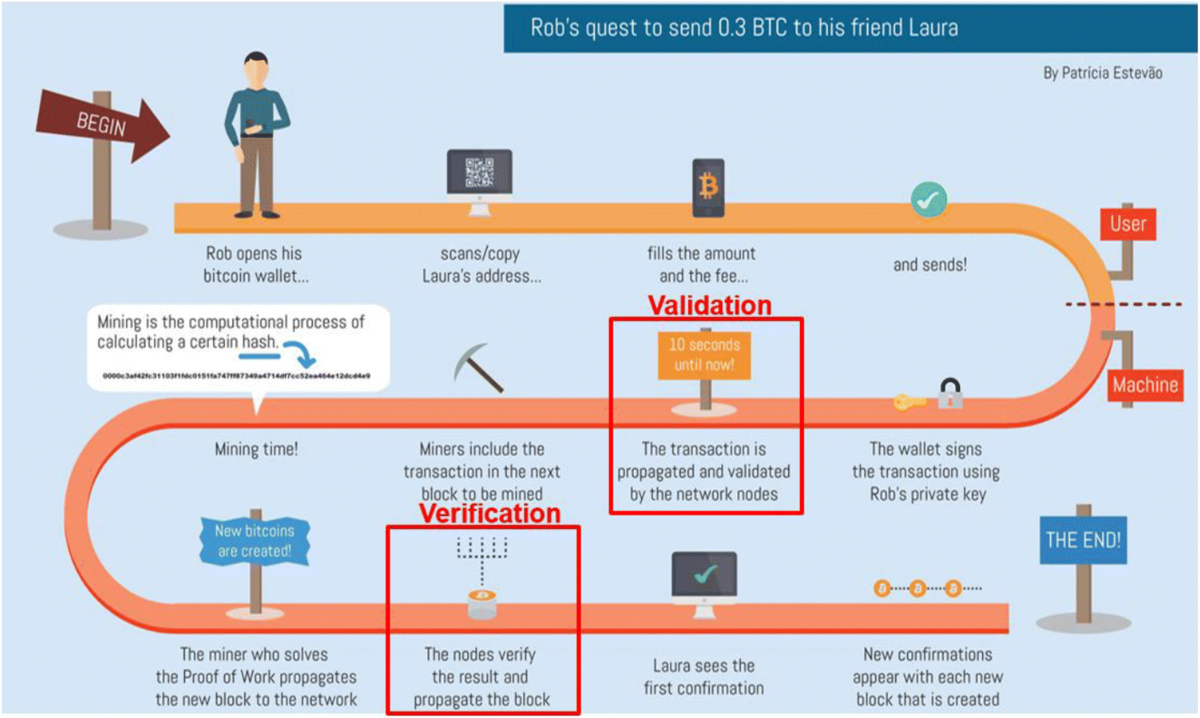
Government agencies no longer guess where crypto assets are hiding. They use specialized blockchain analysis tools to map, trace, verify, and audit transactions across public ledgers. This process turns anonymous wallet addresses into identifiable entities, allowing agencies like the IRS and DOJ to track infrastructure nodes and financial flows with precision.
1. Map wallet identities
The first step is linking blockchain addresses to real-world identities. Agencies rely on data from centralized exchanges (CEXs) and blockchain intelligence firms that have performed Know Your Customer (KYC) checks. When a wallet interacts with a regulated platform, the transaction history becomes tied to a verified identity. This creates the initial entry point for tracking.
2. Trace transaction paths
Once an identity is linked, investigators follow the flow of funds. Blockchain analysis software clusters addresses that likely belong to the same entity. By tracing the path from a known wallet to a destination, agencies can see how assets move through mixers, bridges, or multiple hops. This reveals the full journey of the crypto, even if the final destination is a private wallet.
3. Verify infrastructure nodes
Tracking isn't just about wallets; it's about the infrastructure supporting them. Agencies monitor nodes, validators, and staking pools to understand the scale and location of crypto operations. For example, Coinbase has provided geo-tracking data to law enforcement, helping agencies pinpoint where mining operations or large-scale trading desks are physically located. This adds a physical layer to the digital audit trail.
4. Audit for compliance
The final step is generating a compliant audit report. Agencies use the traced data to verify tax liabilities, identify sanctions violations, or support criminal prosecutions. The public nature of blockchains means this audit is often reproducible by anyone, but only those with the right tools can make sense of the volume. As the U.S. government increasingly tests blockchain for grant distribution and audit trails, the expectation for transparent, traceable crypto infrastructure grows. 1
Link blockchain addresses to real-world identities using KYC data from exchanges and intelligence firms.
Follow the flow of funds through clusters and hops to reveal the full journey of the crypto assets.
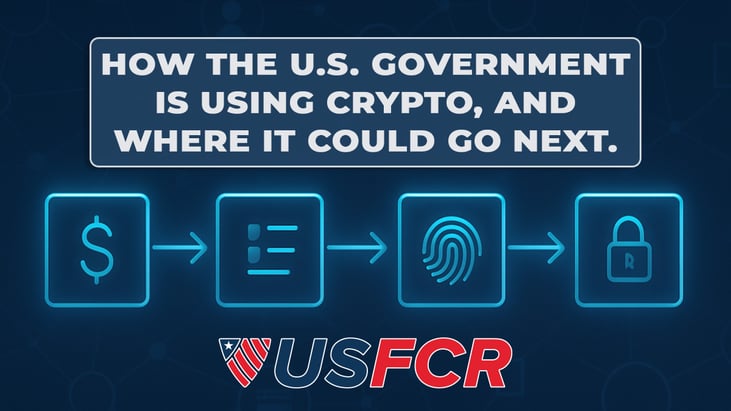
Monitor nodes, validators, and staking pools to identify the physical location and scale of operations.
Generate reproducible audit reports to verify tax liabilities, sanctions, and legal compliance using the traced data.
The blockchain is a public ledger, meaning every transaction is permanently recorded. While this transparency helps law enforcement, it also means that anyone can audit these records. The sophistication of government tracking tools has made it nearly impossible to hide crypto tracks completely. 2
Verify government partnerships
You cannot assume a platform is secure just because it has a large user base. To understand how gov tracking crypto infrastructure actually works, you need to look at the data-sharing agreements behind the scenes. If an exchange cooperates with law enforcement, your transaction history is likely already accessible to investigators. If it doesn't, you are operating in a blind spot.
This is not just about compliance; it is about infrastructure reliability. When the government demands data, platforms that refuse often face sudden shutdowns or frozen assets. Platforms that cooperate maintain stability but sacrifice privacy. You need to map this relationship before you commit significant capital.
The following comparison table outlines how major exchanges handle these requests. Use this to trace the risk level of your chosen platform.
| Platform | Gov Cooperation Level | Data Shared | Infrastructure Risk |
|---|---|---|---|
| Coinbase | High | KYC, Geo-tracking, IP logs | Low (Regulatory Compliance) |
| Binance | Medium | KYC (varies by region) | Medium (Regulatory Scrutiny) |
| Kraken | High | KYC, Transaction History | Low (Established Compliance) |
| Uniswap (DEX) | None | None (Anonymous) | High (No Legal Recourse) |
| Tornado Cash | None | N/A (Sanctioned) | Critical (Blocked Access) |
The Verification Sequence
- Map: Identify the exchange’s legal entity. Is it registered in a jurisdiction with strong data privacy laws or a lenient one?
- Trace: Search for public subpoenas or court orders. Sites like Atlantic Council’s Digital Forensic Research Lab often publish case studies of government seizures.
- Verify: Check the platform’s Terms of Service. Look for clauses regarding "legal process" or "government requests."
- Audit: If you are holding significant assets, consider using a platform that provides proof of reserves and clear compliance reporting.
As the Department of Homeland Security notes, blockchain technology is being actively monitored across multiple sectors. Ignoring these partnerships is a strategic error. Choose your infrastructure based on how much visibility you are willing to give up for security.
Audit your compliance posture
Before regulators come knocking, you need to know exactly what they can see. The blockchain is a public ledger, meaning every transaction is permanently recorded and visible to anyone with the right tools. As law enforcement agencies have noted, there is no way to hide those tracks once they are on-chain [1]. Your job is to ensure your internal systems are ready for that level of scrutiny.
Start by mapping your data flows. You must identify every point where crypto assets enter, exit, or move through your infrastructure. This includes cold storage wallets, hot wallets, and any third-party custodial services. If you cannot trace a transaction from the blockchain back to a specific internal account, you have a blind spot.
Next, verify your identity protocols. Government tracking relies heavily on linking wallet addresses to real-world identities. Ensure your KYC (Know Your Customer) and AML (Anti-Money Laundering) procedures are up to date and integrated directly into your user onboarding flow. Without this link, you are operating in the dark, and regulators do not look favorably on opacity.
Finally, conduct a mock audit. Use blockchain analytics tools to simulate a government investigation. Can you produce a complete transaction history for any user within 24 hours? If the answer is no, you need to fix your data retention and reporting systems now, not later.
Compliance Audit Checklist
Use this checklist to verify your infrastructure meets current gov tracking crypto infrastructure requirements:
-
Map all wallet addresses: List every internal and external wallet used for business operations.
-
Verify KYC/AML integration: Confirm that user identities are linked to on-chain addresses at the point of entry.
-
Test transaction tracing: Ensure you can trace any transaction back to its source and destination within your records.
-
Review data retention: Check that transaction logs are stored securely and are easily retrievable for regulatory requests.
-
Update policy documents: Ensure your privacy and compliance policies reflect current IRS and FinCEN guidance.
Can the government track your cryptocurrency?
The short answer is yes. Unequivocally yes. But what surprises most people isn't that the IRS can track crypto. It's how sophisticated their methods have become, how much data they already have, and how many users discovered this the hard way.
The FBI and other agencies treat the blockchain as a public ledger that is free for anyone to audit. Anyone can look up a specific bitcoin wallet address and see every transaction that's come in and out from the very beginning. There is no way to hide those tracks, making this an incredibly powerful tool for law enforcement.
Beyond public ledgers, government agencies like DHS are actively developing blockchain portfolios and tracing capabilities. They partner with firms like Chainalysis to map transaction flows. When you use a centralized exchange, that data is already on file, linking your identity to your wallet addresses.
No comments yet. Be the first to share your thoughts!