Gov tracking crypto tools
Government agencies use specialized blockchain analysis software to map wallet addresses, trace fund flows, and identify illicit activity. These tools transform anonymous ledger data into actionable intelligence for law enforcement and regulatory bodies. The primary platforms powering these efforts are Chainalysis, Elliptic, and TRM Labs.
The core function of these tools is clustering. They group multiple addresses belonging to the same entity, linking cold storage wallets to known exchanges or mixing services. This allows agencies to follow funds across chains, even when users attempt to obfuscate their trails.
| Platform | Primary Focus | Key Strength | Typical User |
|---|---|---|---|
| Chainalysis | Compliance & Law Enforcement | Broadest blockchain coverage | FBI, IRS, Exchanges |
| Elliptic | Financial Crime Prevention | Strong fiat on-ramp/off-ramp mapping | Global Banks, Regulators |
| TRM Labs | Real-time Risk Detection | AI-driven anomaly detection | Crypto Native Firms |
Choosing the right tool depends on the specific use case. Law enforcement agencies often prioritize Chainalysis for its comprehensive historical data and legal admissibility in court. Financial institutions typically prefer Elliptic for its deep integration with traditional banking compliance workflows. Newer crypto-native firms may lean toward TRM Labs for its real-time API capabilities.
The decision ultimately rests on data depth versus integration speed. Agencies needing deep forensic audits for criminal investigations benefit from the extensive historical archives provided by market leaders. Conversely, businesses requiring instant transaction screening for AML compliance may find real-time API solutions more practical for daily operations.
Choosing the right crypto tracking infrastructure
Selecting a government-grade crypto tracking tool requires balancing detection depth against operational cost and legal constraints. The landscape is fragmented, with solutions ranging from open-source blockchain explorers to proprietary AI-driven analytics platforms. Agencies must evaluate these options based on their specific investigative needs, budget, and the types of assets they monitor.
Core Tradeoffs: Cost vs. Coverage
The most significant decision point involves the tradeoff between data breadth and financial outlay. Commercial platforms offer comprehensive, real-time data across thousands of chains and tokens, including privacy coin analysis and entity labeling. However, these services often carry steep subscription fees that can strain agency budgets, especially for smaller jurisdictions. Open-source alternatives like blockchain explorers provide free access to raw ledger data but require significant in-house technical expertise to interpret and aggregate, shifting costs from licensing to personnel.
Latency and Accuracy
Speed of data ingestion is critical for time-sensitive investigations. Proprietary tools typically offer near-instant transaction indexing and automated risk scoring, allowing analysts to act quickly on suspicious activity. In contrast, manual or open-source methods may introduce latency as investigators parse blocks individually. Accuracy is also a key differentiator; advanced platforms use machine learning to cluster wallet addresses and identify associated entities, reducing false positives that plague simpler heuristic-based tracking methods.
Legal Admissibility and Compliance
Not all tracking data is created equal in a court of law. Government agencies must ensure their tools comply with federal evidence standards. Commercial vendors often provide audit trails and certified data export formats that simplify the chain of custody process. Open-source tools may lack these formalized compliance features, requiring investigators to manually document their methodology to withstand judicial scrutiny. Additionally, data privacy laws increasingly restrict how certain types of metadata can be stored or shared, influencing which platforms are legally viable.
Comparison of Tracking Approaches
The following table compares common government crypto tracking methodologies across key operational dimensions.
| Tool Type | Cost | Data Depth | Required Skill | Latency |
|---|---|---|---|---|
| Commercial Analytics (Chainalysis, Elliptic) | High | Comprehensive | Low | Real-time |
| Open-Source Explorers (Blockchain.com) | Free | Basic | High | Slow |
| Custom Scripting (Python, APIs) | Medium | Variable | Expert | Variable |
| Specialized Privacy Coin Tools | Very High | Deep | High | Real-time |
Decision Framework
Agencies should prioritize based on their primary use case. For high-volume, high-priority investigations involving major cryptocurrencies, commercial platforms offer the best balance of speed and depth. For routine monitoring or budget-constrained operations, open-source tools combined with targeted scripting can be effective. Specialized cases involving privacy coins or complex mixers often require dedicated, expensive solutions due to the technical difficulty of tracing obscured transactions.
Choosing the Right Tracking Software for Your Needs
Selecting the right crypto tracking software depends on whether you are an individual investor, a business, or a compliance officer. The best tools balance data accuracy with ease of use, but no single platform handles every use case perfectly. Below is a framework to help you decide which type of software fits your specific regulatory or personal needs.

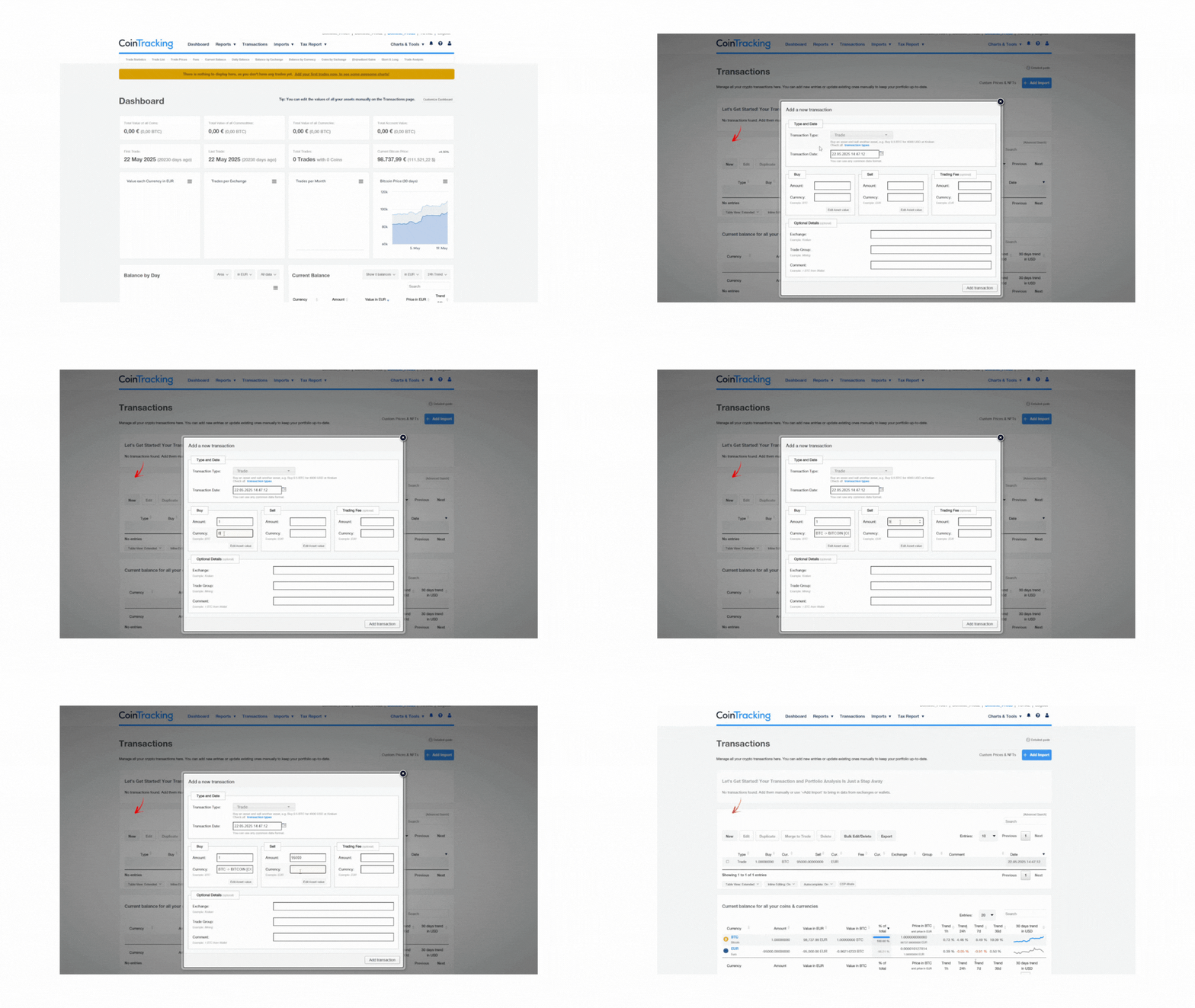
If you need to file taxes or track personal portfolio performance, look for software that integrates directly with major exchanges. The best crypto tracking software for individuals automates transaction history imports and generates IRS-compliant reports. Prioritize tools that handle complex events like staking rewards, airdrops, and DeFi interactions, as these are common sources of tax errors.

Businesses dealing with high transaction volumes need enterprise-grade solutions. These tools offer real-time transaction monitoring, KYC/AML integration, and API access for custom workflows. The focus here is on scalability and regulatory reporting rather than simple tax calculation. Ensure the software supports multiple blockchains and can handle large datasets without lag.

Regulatory bodies and law enforcement agencies use specialized blockchain analysis tools. These platforms, often provided by firms like Chainalysis or Elliptic, offer deep transaction tracing, entity identification, and risk scoring. They can link wallet addresses to real-world identities and flag suspicious activities like money laundering or sanctions evasion. This type of software is essential for investigating illicit crypto activity.
Security-focused trackers provide alerts for unusual wallet activity and monitor for known malicious addresses. These tools help you stay ahead of potential scams or hacks by scanning your holdings against threat databases. While they may not offer advanced tax features, they are critical for protecting your assets in a high-risk environment.


As an Amazon Associate, we may earn from qualifying purchases.
| Use Case | Best For | Key Feature |
|---|---|---|
| Personal Taxes | Individual Investors | Automated Tax Reports |
| Business Operations | Exchanges & Firms | Real-time Monitoring |
| Investigation | Law Enforcement | Entity Identification |
| Asset Protection | Security-Conscious Users | Threat Alerts |
The choice ultimately comes down to your primary goal. If you are worried about taxes, choose a dedicated tax software. If you are running a business, look for enterprise compliance tools. For investigations, specialized blockchain analysis is non-negotiable. Always verify that any software you choose is regularly updated to handle new blockchain protocols and regulatory requirements.
Spot the Weak Options
The market for government-grade crypto tracking is crowded with tools that overpromise on privacy or underdeliver on chain analysis. Many vendors market "anonymous" tracking solutions, but these often fail against sophisticated mixing services or privacy coins like Monero. When evaluating software, look for explicit support of advanced obfuscation techniques. If a tool claims to bypass all regulatory reporting, it is likely misleading.
Government agencies rely on specialized infrastructure, not consumer-grade wallets. Tools like Chainalysis or Elliptic provide the necessary transaction graphing and entity clustering. Using a standard blockchain explorer is insufficient for compliance. These platforms integrate with law enforcement databases, allowing real-time flagging of illicit addresses. Without this integration, you are flying blind against organized crime networks.
A common mistake is assuming that all crypto transactions are easily traceable. While Bitcoin and Ethereum are public, tracing requires significant resources and expertise. The FBI and IRS have dedicated units for this, but they prioritize high-value cases. For smaller infractions, the likelihood of detection drops. However, recent trends show increased automation in tracking, making even small transactions risky. Always assume your activity is visible to those with the right tools.
Government tracking crypto tools: FAQ
Regulatory compliance and personal data privacy often collide in the crypto space. Below are direct answers to the most common questions about how government agencies monitor blockchain activity and which tools remain relevant for 2026.
No comments yet. Be the first to share your thoughts!